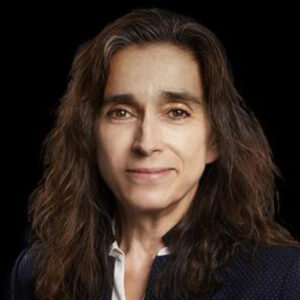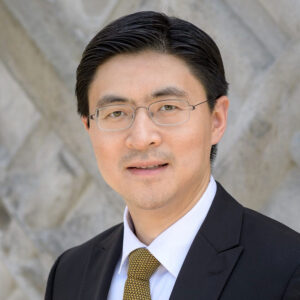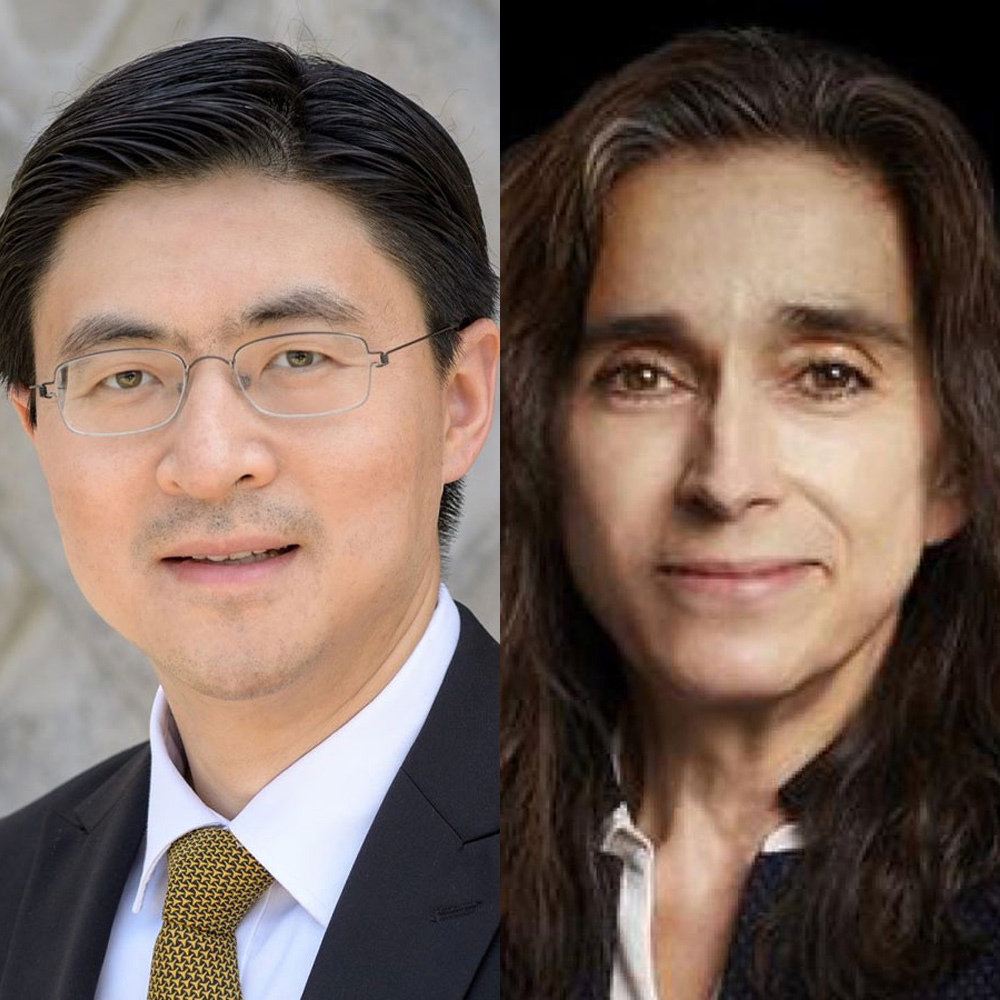
The National Academy of Engineering announced on Feb. 10, 2026, the election of 130 new members to its Class of 2026, including two distinguished Hertz Fellows whose groundbreaking careers exemplify the transformative power of supporting exceptional scientific talent: Kimberly Budil, director of Lawrence Livermore National Laboratory, and Mung Chiang, president of Purdue University.
Election to the NAE represents one of the highest professional honors accorded to an engineer, recognizing those who have made outstanding contributions to engineering research, practice or education. For Budil and Chiang, this honor crowns careers marked by technical brilliance, visionary leadership and profound impact on national security, education and technological innovation.
Budil’s election recognizes her contributions to advancing nuclear deterrence through technical leadership and government advisory roles. As the first woman to lead Lawrence Livermore National Laboratory in its 70-year history, Budil has overseen groundbreaking achievements, including the laboratory’s historic demonstration of fusion ignition in 2022. She also serves as a board member of the Hertz Foundation, maintaining her connection to the fellowship that helped launch her career. Her A 1994 Hertz Fellow at the University of California, Davis, she earned her Ph.D. in engineering and applied science, conducting pioneering research in high-order harmonic generation. Today, she stewards one of the nation’s premier scientific institutions, ensuring the safety and reliability of America’s nuclear deterrent while advancing cutting-edge science and technology.
Chiang’s election honors his contributions to networks and edge computing, as well as his transformative leadership in U.S. higher education. As president of Purdue University since 2023, he has championed excellence at scale, making Purdue one of the nation’s premier public research universities. His groundbreaking work in edge computing, network utility maximization and wireless resource allocation has earned him numerous accolades, including the prestigious National Science Foundation Alan T. Waterman Award in 2013, the highest honor for American researchers under 40. A 1999 Hertz Fellow at Stanford University, he has become a prolific inventor with dozens of U.S. patents, co-founded multiple startup companies and served as science and technology adviser to the U.S. secretary of state.
The Hertz Fellowship, established in 1963, has empowered more than 1,300 fellows with an extraordinary track record of accomplishment. The fellowship provides generous financial support, intellectual freedom and lifelong mentorship within a multidisciplinary community. Both Budil and Chiang pursued ambitious research during their fellowships and have gone on to leadership positions of national significance.
Their election to the NAE underscores a vital truth: investing in exceptional young scientific minds yields dividends that extend far beyond individual achievement. Budil and Chiang have not only advanced their fields but have become leaders who shape institutions, influence policy and inspire the next generation of engineers and scientists. Their stories remind us that supporting scientific talent at critical early-career stages can generate impact that reverberates across decades, strengthening American innovation, security and leadership on the global stage.
About the Hertz Foundation
The Hertz Foundation is the nation’s preeminent nonprofit organization committed to advancing American scientific and technological leadership. For more than 60 years, it has stood as an unwavering pillar of independent support through the renowned Hertz Fellowship, cultivating a multidisciplinary network of innovators whose work has positively impacted millions of lives. Learn more at hertzfoundation.org.