

Hertz Fellow Julius Lucks is using the molecular machinery of microbes to bring water safety testing out of the lab — and into the hands of communities that need it most.
Water is largely tasteless to humans. But to the microbial world, it is anything but.
Bacteria that live in contaminated environments have spent millions of years evolving exquisitely sensitive molecular detectors — proteins that latch onto specific chemical threats and trigger a cellular response. Hertz Fellow Julius Lucks, a chemical and biological engineer at Northwestern University, is asking a deceptively simple question: what if we could borrow those detectors, strip them out of the cell entirely, and put them to work for us?
The answer is ROSALIND — a platform named after chemist Rosalind Franklin, and short for RNA Output Sensors Activated by Ligand Induction. Rather than building sensors from scratch, Lucks and his team reverse-engineer the sensing molecules that microbes already use to detect contaminants, then reprogram them inside a cell-free system: a carefully prepared mixture of molecular machinery — DNA, RNA, and proteins — that can run biological reactions outside of any living organism. When ROSALIND detects a target chemical, it triggers the production of a fluorescent RNA molecule. The sample glows. Minimal laboratory equipment required. No microbiologist needed on site.
The earliest version of the platform could screen for 17 different contaminants from a single drop of water, flagging anything that exceeded EPA safety thresholds. But sensitivity was a limiting factor — some contaminants lurk at concentrations so low that even a well-designed biosensor might miss them.
Lucks’s team published a solution in Nature Chemical Biology: a signal amplification circuit that exploits an enzyme — one that had long been considered an annoyance by RNA engineers — to recycle and replay detection signals, effectively turning up the volume on weak readings. The latest iteration of ROSALIND is now 10 times more sensitive than its predecessor, and for the first time can detect nucleic acid targets like DNA fragments and RNA, not just small molecules and metals.
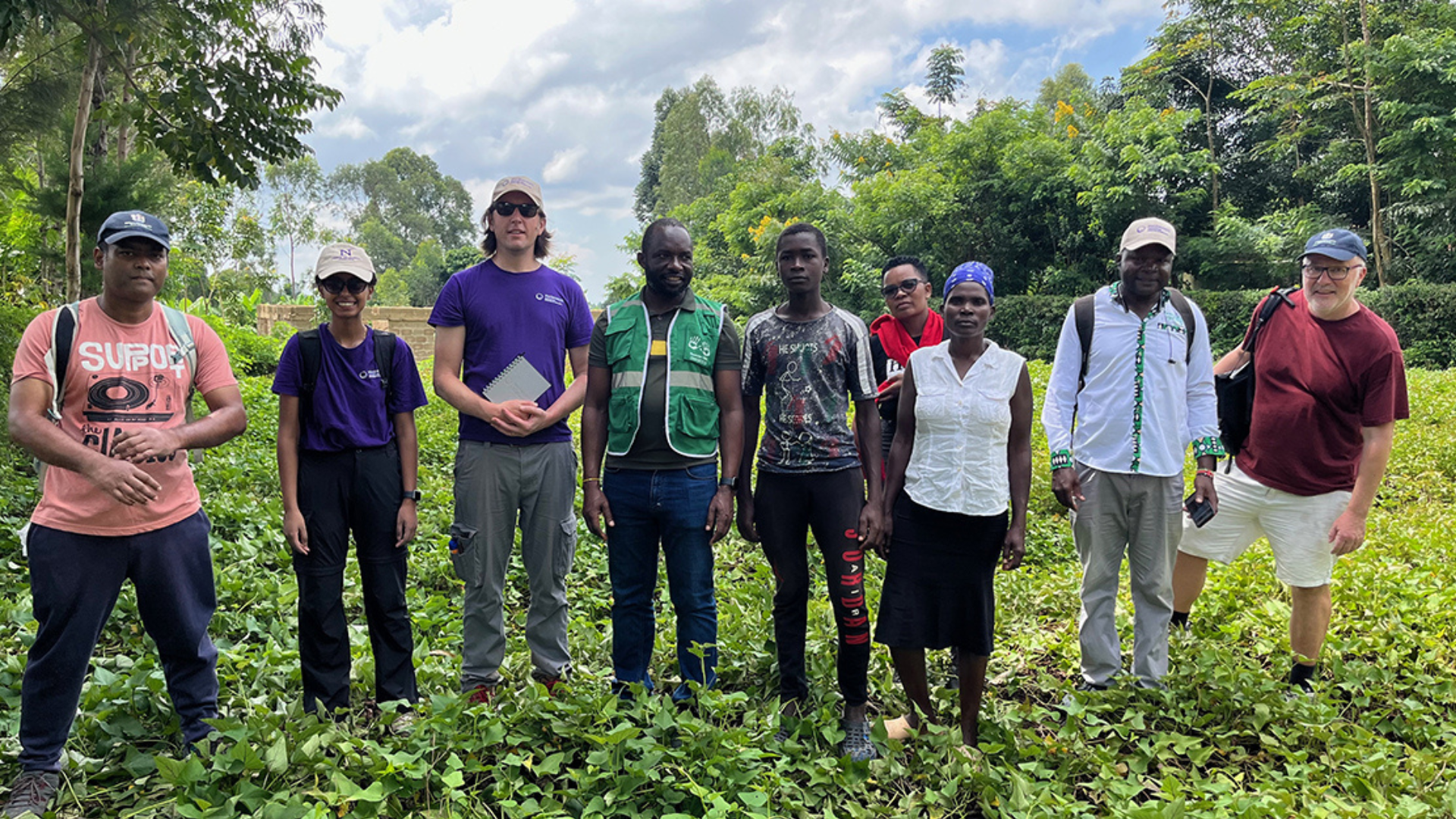
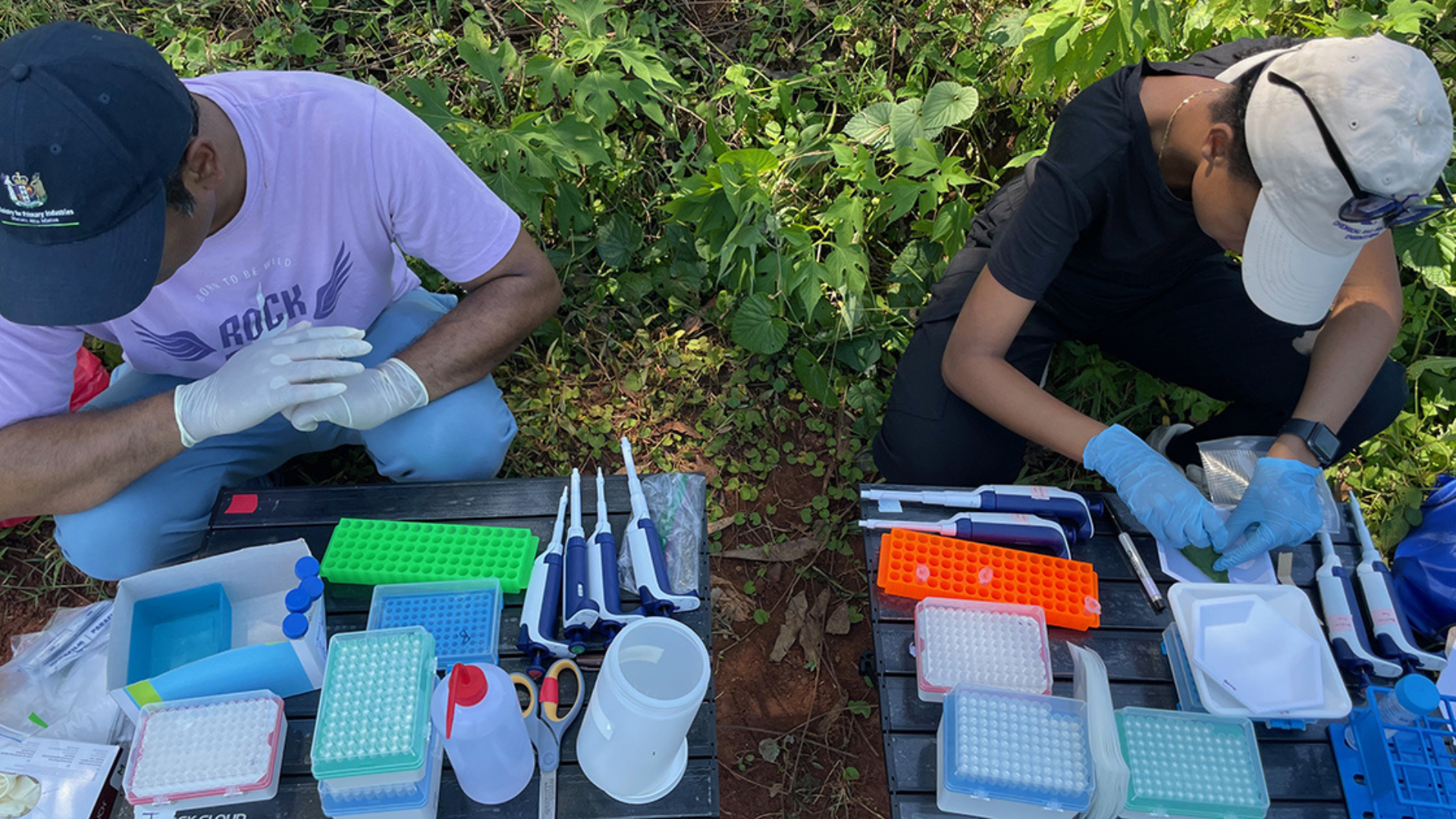
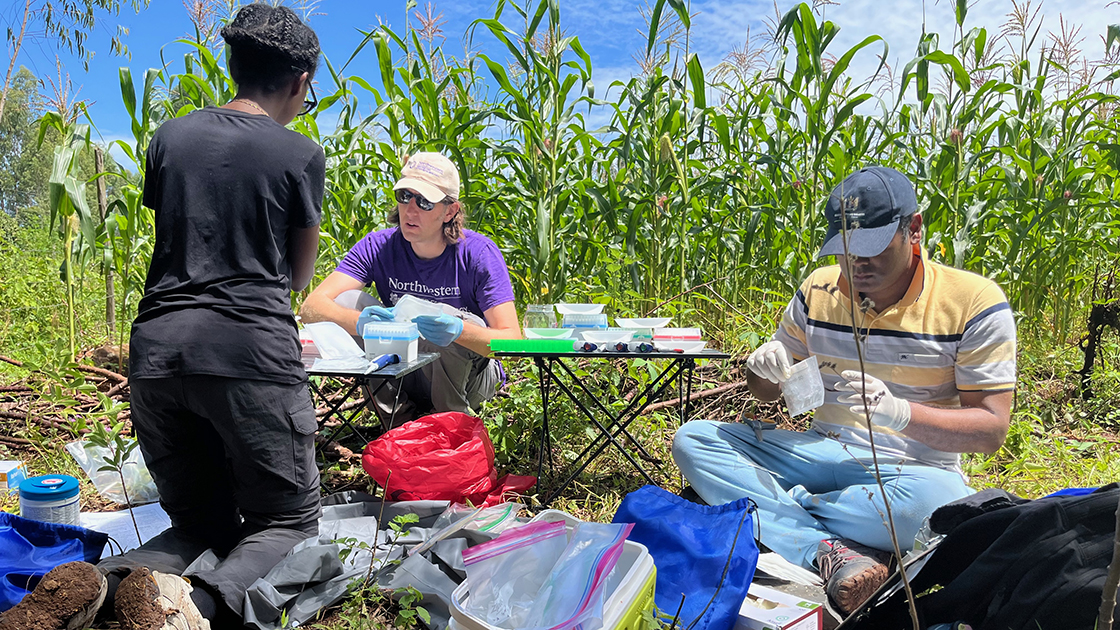
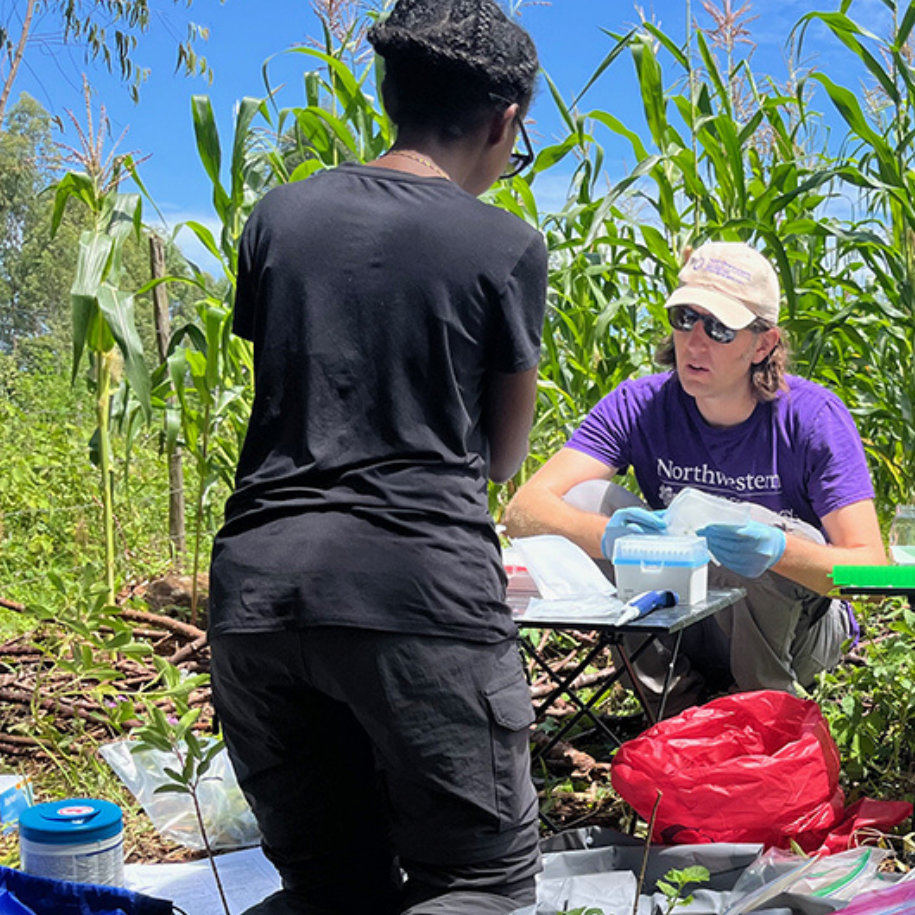
The real test, though, isn’t in the lab. ROSALIND is already in the field. In the Chicago area, households are using the platform to test their tap water for lead. In rural Kenya, Lucks’s team has conducted field trials in dozens of households measuring fluoride levels in drinking water — a serious public health concern in parts of East Africa where geologic sources naturally elevate concentrations far beyond safe limits. Field trials of a CRISPR-based crop pathogen detector developed in his lab are underway in Kenya and Uganda.
“Taking the technology out of the lab and into the field is critical – not only for discovering and correcting failure modes in the tech, but for interfacing with the stakeholders you are trying to help with the tech,” said Lucks. “Partnering with social scientists in this work has changed our perspective to think about co-developing this technology with the people that need it the most.”
That body of work earned Lucks election to the American Association for the Advancement of Science, recognized specifically for his contributions to RNA biology and synthetic biology — and for creating diagnostics with genuine global health impact.
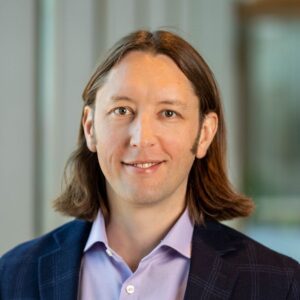
“The Hertz Fellowship and community have been catalytic for my career. Support in graduate school helped me transition from chemistry to theoretical physics where I was first exposed to RNA,” Lucks said. “Being a part of the Hertz community full of world leaders inspired me to leap into synthetic biology and think about how we could transform society by enabling anyone, anywhere to understand the health of themselves and their environments.”
It is the kind of research trajectory that the Hertz Fellowship was designed to enable. Up to five years of financial support — a stipend and full tuition equivalent — gave Lucks the runway to pursue questions that were scientifically unconventional and whose applications were far from obvious at the outset. Equally important, he became part of a lifelong network of Hertz Fellows spanning generations and disciplines: scientists and engineers who share an affinity for hard problems and high-risk ideas. That community, and the freedom it represents, is something Lucks has spoken about as foundational to the direction his career took.
For Lucks, the scientific and the practical are inseparable. Technologies that only work in well-funded research labs, he argues, aren’t finished yet. The goal isn’t a beautiful sensor. It’s one that a community health worker can use on a Tuesday morning to tell 30 families whether their water is safe to drink.
About the Hertz Foundation
The Hertz Foundation is the nation’s preeminent nonprofit organization committed to advancing American scientific and technological leadership. For more than 60 years, it has stood as an unwavering pillar of independent support through the renowned Hertz Fellowship, cultivating a multidisciplinary network of innovators whose work has positively impacted millions of lives. Learn more at hertzfoundation.org.

