
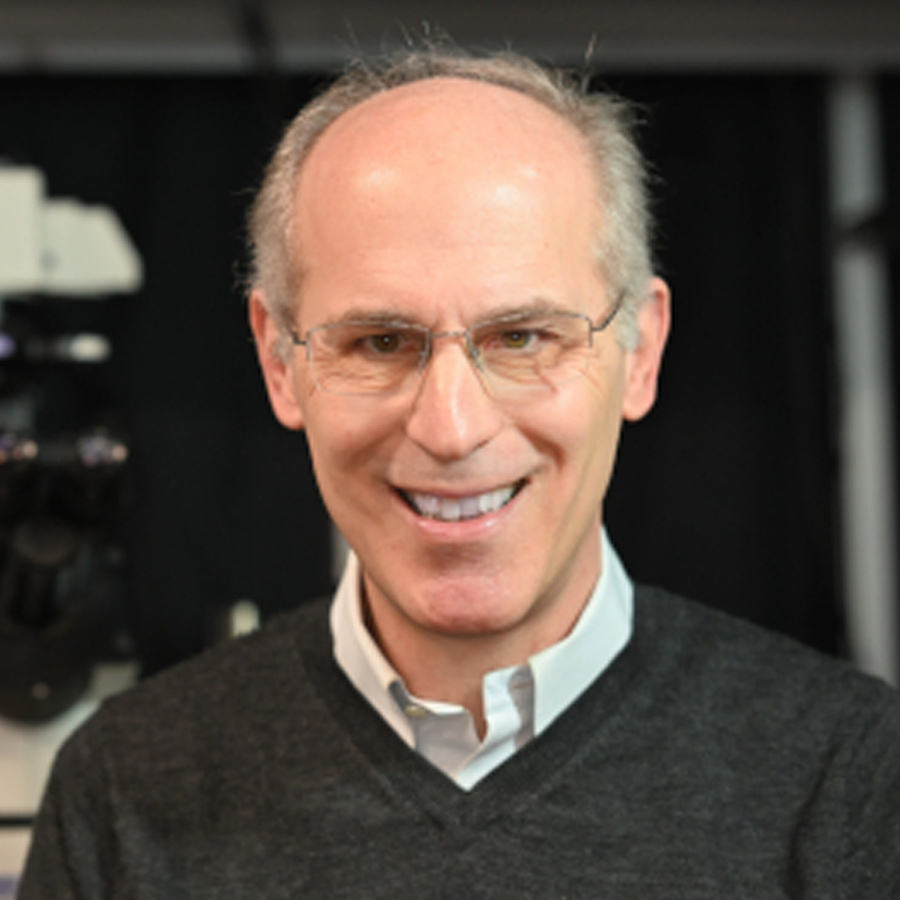
Professor Raymond E. Goldstein FRS is the Alan Turing Professor of Complex Physical Systems in the Department of Applied Mathematics and Theoretical Physics (DAMTP) at the University of Cambridge, where he is also a Fellow of Churchill College. His distinguished academic career began in the physical sciences, earning dual S.B. degrees in Physics and Chemistry from the Massachusetts Institute of Technology (MIT) in 1983. He then completed his M.S. (1986) and Ph.D. (1988) in Physics at Cornell University.
Dr. Goldstein’s research operates at the intersection of mathematics, physics, and biology, focusing on nonequilibrium phenomena in the natural world. A primary focus of his work is the physics of multicellularity, where he studies the collective dynamics, transport, and mixing in dense suspensions of bacteria and algae. He is also a global leader in researching the fluid dynamics of life, particularly cytoplasmic streaming (intracellular fluid circulation) and the mathematical modeling of fundamental developmental processes, such as the physical mechanisms behind cell sheet folding and embryonic inversion in organisms like Volvox algae.
Before joining Cambridge, Dr. Goldstein held key faculty positions in the United States. Following his postdoctoral work at the University of Chicago (1988–1991), he served as an Assistant Professor of Physics at Princeton University (1991–1996), where he was also associated with the Program in Applied and Computational Mathematics. He then moved to the University of Arizona, where he was a Professor of Physics and Applied Mathematics (1996–2006). In 2006, he began his tenure at the University of Cambridge, initially holding the Schlumberger Professorship of Complex Physical Systems before being appointed the Alan Turing Professor in 2023.
Dr. Goldstein’s contributions to fluid dynamics and biological physics have garnered him numerous honors. He was elected a Fellow of the Royal Society (FRS) in 2013 and is also a Fellow of the American Physical Society and the Institute of Physics. His awards include the G.K. Batchelor Prize in Fluid Mechanics (2016), the Wellcome Trust Senior Investigator Award (2012-2017), the Rosalind Franklin Medal and Prize (2016), and the Apker Award (1983). His work continues to reveal the intricate physics underlying the most complex phenomena in the living world.


