
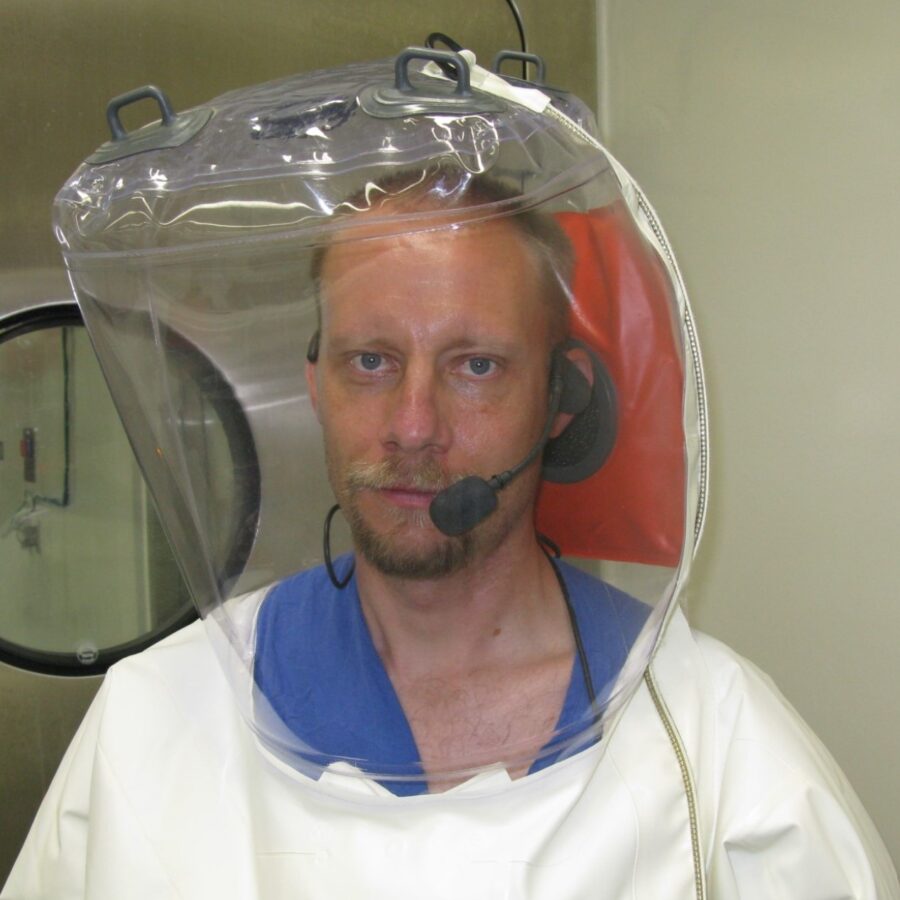
Joseph Prescott, Ph.D., is the Deputy Director of the Biosafety Level-4 Laboratory (BSL-4) at the Robert Koch Institute in Berlin, Germany, where he leads the Comparative Immunology of Risk Group-4 Viruses Group. With over two decades of experience, Dr. Prescott is a leading expert in the study of the world’s most pathogenic viruses, including Ebola, Lassa, and Nipah viruses, as well as their animal reservoirs.
Dr. Prescott’s research uniquely integrates a wide range of animal model systems, including “non-model” organisms such as bats, multimammate rats, and deer mice. While these viruses are highly lethal to humans, they typically cause no harm to their natural host species. His work seeks to understand how these animals tolerate the viruses and sustain their ecological presence. Concurrently, Dr. Prescott investigates human and non-human primate responses to these pathogens to identify immune mechanisms that trigger severe disease and to develop and test vaccines against these deadly viruses.
Throughout his career, Dr. Prescott has conducted virology and immunology studies at the highest biosafety levels, with hands-on experience in BSL-4 labs at the National Institutes of Health (NIH), Centers for Disease Control and Prevention (CDC), and Robert Koch Institute. He earned his Ph.D. from the University of New Mexico School of Medicine and completed a postdoctoral fellowship at the NIH’s Rocky Mountain Laboratories.
Dr. Prescott has been recognized for his impactful contributions to global health, receiving the NIH Director’s Award twice: first for his pivotal work in Liberia during the 2013-2016 Ebola virus outbreak, and later for his research on disease mechanisms caused by MERS coronavirus. His groundbreaking research continues to advance the understanding of virus-host interactions and the development of life-saving vaccines.


